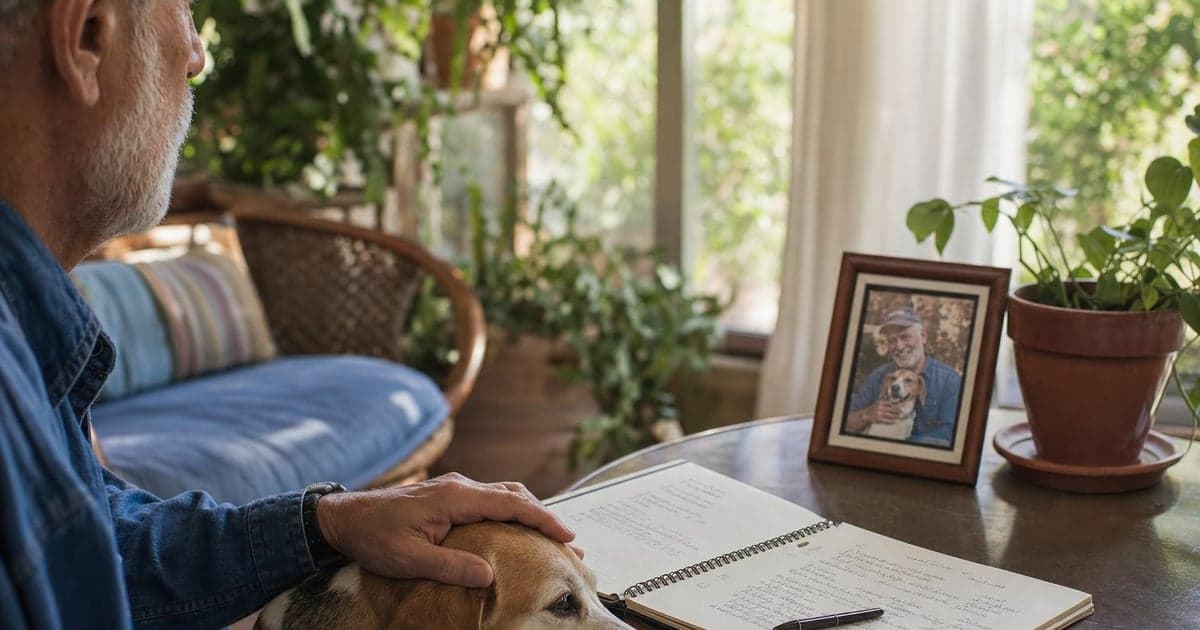
If you live alone with a dog or cat, a medical emergency creates two crises at once: yours, and your animal's. Most solo agers have a plan for neither. This article gives you a concrete, four-part system you can build in 30 days, without a legal degree, that keeps your dog or cat cared for and keeps you in control of your own life.
The Uncomfortable Truth About Solo Agers and Pet Emergencies
Picture this: Frank falls on a Saturday evening. He's conscious but can't reach his phone. By Sunday morning, his dog has been without water for 14 hours. By Monday, when a neighbor finally notices something is off, the animal has gone nearly two days without care. Nobody planned for this gap. Nobody even talked about it.
That scenario is not morbid speculation. Adults 65 and older account for approximately 36 million falls annually in the United States, according to the CDC Older Adult Fall Prevention data, and many of those falls result in multi-day hospitalizations. At the same time, the U.S. Census Bureau's 2023 American Community Survey finds that roughly 28% of older adults live alone, representing approximately 14.7 million people. A large share of those households contain only one human and one animal.
Pet ownership among adults 50 and older is high: AARP research on loneliness and companion animals consistently finds that 55 to 60% of adults in that age group own a pet, and roughly half describe their pet as their primary companion. That is not a lifestyle detail. That is a relationship with real stakes.
Shelter surveys suggest that hundreds of thousands of pets are surrendered or abandoned annually in the United States due to owner illness, hospitalization, or death, according to ASPCA shelter intake data. The precise figure is an estimate, not a hard count, but the pattern is clear and consistent across shelter reports.
Here is the reframe that matters: what happens to your pet if something happens to you is not a question about giving up control. It is the question that a responsible person who takes their relationships seriously asks before they have to. Planning for your dog or cat is infrastructure for independence, not a concession to anything.
Why Solo Agers Face a Unique Pet Safety Problem
The combination of living alone and normal aging-related medical risk creates a specific vulnerability that no single existing service fully addresses.
The Administration for Community Living identifies social isolation as a compounding risk factor for older adults living alone. Solo agers may go 24 to 48 hours or more without anyone noticing a medical emergency, based on the U.S. Census Bureau's 2023 living arrangements data and community-level observations about social contact patterns. That window is not just dangerous for Frank. It is the exact window in which an unattended dog runs out of water, a cat runs out of food, or a medicated animal misses a critical dose.
The stakes are also identity-level, not just logistical. AARP's research on aging in place documents that pets are a significant motivator for older adults to stay in their own homes and resist assisted-living transitions. A pet safety plan, built correctly, protects both the animal and Frank's ability to live exactly the way he wants to live.
The solution has four components. Each one is practical. None of them requires Frank to admit he needs help.
The Four Pillars of Pet Safety for Solo Agers
Effective pet safety rests on four interlocking pillars. Most solo agers have zero of them. Building all four takes about a month.
Pillar 1: Emergency Alert System
The first pillar is making sure that the first person who responds to a crisis knows your dog or cat exists and knows exactly who to call.
A medical ID bracelet or wallet card can include a brief line: "Pet at home. Contact [name] at [number]." That single line alerts ER staff and first responders before Frank can speak for himself. It costs almost nothing and takes ten minutes to set up.
Your ICE contacts in your phone ("In Case of Emergency") should be labeled with pet-care context, not just a name. "Maria - has key, knows feeding schedule" is more useful than "Maria" alone.
At minimum, two people should have a physical key to your home and a working knowledge of your dog's or cat's daily needs. Those two people are your first line of response in any emergency, medical or otherwise. Make sure they know they are on that list.
A solid pet emergency plan starts here, before any legal paperwork, because paperwork is useless if the first responder does not know your cat is locked in the back bedroom.
Pillar 2: Legal Backup
The second pillar is making your wishes enforceable, not just known.
Pet trusts are legally enforceable in all 50 U.S. states, as recognized by the American Bar Association's Commission on Law and Aging. A pet trust names a guardian, provides funding for care, and specifies care standards. Unlike an informal agreement with a neighbor, a pet trust cannot simply be ignored.
A designated pet guardian named in your will or durable power of attorney provides similar protection at lower cost. If you already have an estate attorney, adding a pet guardian designation is typically a straightforward amendment.
A signed vet authorization letter is the most immediately practical document most solo agers are missing. It names a specific contact who is authorized to approve and pay for veterinary treatment on your behalf. Without it, your emergency contact may arrive at the vet's office and be told they cannot consent to your dog's care because they are not the legal owner.
One important caveat: enforceability details for pet trusts vary by jurisdiction. The ABA Commission on Law and Aging is the right starting point, but consult a local estate attorney for guidance specific to your state. This is one area where designating a legal pet guardian with proper documentation is worth the cost of a single attorney consultation.
Pillar 3: Daily Visibility
The third pillar is the one most solo agers overlook entirely, because it is not about the pet directly. It is about closing the 24 to 48 hour window between something going wrong with Frank and someone finding out about it.
The core gap is simple: no one knows Frank is down until it is already too late for his dog too. A daily check-in service closes that window by design. If Frank does not respond to a check-in call by a set time, a pre-arranged escalation goes to his emergency contact, who has a key and a pet care sheet and knows exactly what to do.
CDC fall prevention data frames undetected falls as a compounding harm, not just because of the injury itself but because of the time elapsed before help arrives. The same logic applies to the animal in the home.
AloneAssist is built for exactly this use case. A daily check-in call confirms Frank is okay and, if he is not, triggers the emergency contact escalation that includes pet-care handoff. This is not a separate pet-monitoring service layered on top of something else. It is an integrated layer that covers Frank and his dog at the same time, in the same call.
Pillar 4: Cached Supplies and Records
The fourth pillar is making sure that whoever shows up to care for your dog or cat can actually do it without calling you for instructions you cannot give.
Vet records (vaccination history, current medications, microchip number) should be printed and stored somewhere accessible to your emergency contacts, not just saved as a PDF on your phone. A 72-hour supply of pet food and any prescription medications should be stored in a clearly labeled, accessible location.
The single most useful object you can make today is what the voice brief calls "the fridge sheet": a laminated card on the refrigerator listing the feeding schedule, the vet's name and number, any medical notes, and the guardian's contact information. First responders and emergency contacts know to check the fridge. Put it there.
Give a physical copy to at least one trusted person outside your home. This is the document that makes Pillar 1 and Pillar 2 actually work under pressure. For a full template and walkthrough, the pet care plan for emergencies guide covers every field worth including.
Comparing Your Pet Safety Options as a Solo Ager
Four approaches exist for solo agers who want to protect their dog or cat during a medical emergency. Each has real trade-offs. Frank should understand all four before deciding what combination fits his situation.
Option 1: DIY (Spreadsheet + Neighbor Trust)
What it is: An informal arrangement where a neighbor has a key, Frank texts a friend when he gets home, and everyone operates on goodwill and memory.
Who it is for: Solo agers with a reliable, nearby social network who see each other regularly.
Cost: Free.
Standout feature: Zero friction to set up. No forms, no fees, no appointments.
Key limitation: This system is entirely dependent on human memory and goodwill, with no accountability loop. If the neighbor moves, gets sick, or simply forgets, the system silently fails. Frank will not know it has failed until he needs it. The U.S. Census Bureau data on social isolation among older adults living alone underscores the risk: the people most likely to be in crisis are also the people least likely to have robust informal networks checking on them. Fragile by design.
Option 2: Pet-Specific Services (Pet Sitters, Dog Walkers, Autoship Medication Delivery)
What it is: Scheduled professional services that ensure the animal is fed, walked, and supplied with medication on a routine basis.
Who it is for: Solo agers who want professional accountability for pet care and have separate arrangements for their own safety.
Cost: Roughly $15 to $30 per visit for pet sitters; medication autoship varies by product and pharmacy.
Standout feature: Reliable, recurring pet care with professional accountability. A daily dog walker, for example, will notice if something seems wrong when they arrive.
Key limitation: These services are oriented toward the pet's schedule, not Frank's welfare. A pet sitter who finds Frank unconscious on the kitchen floor has no protocol for what to do next. Pet-specific services are an important piece of the system, but they are not a substitute for a human-safety layer. Incomplete coverage on their own.
Option 3: Integrated Daily Check-In Services with Pet Welfare Protocols
What it is: A daily check-in call or digital contact that confirms Frank is okay and triggers a pre-arranged pet-care response if he is not.
Who it is for: Solo agers who want one system covering both their own safety and their pet's welfare, without managing two separate services.
Cost: Varies by provider. Phone-based check-in services typically run from $20 to $50 per month.
Standout feature: This option closes the 24 to 48 hour undetected emergency window documented in the U.S. Census Bureau's living arrangements data and the ACL's isolation risk framing. AloneAssist is built specifically for this use case: the daily check-in call confirms Frank is okay, and if he does not respond, escalation goes to a pre-loaded emergency contact who has a key, a pet care sheet, and instructions for the dog. One system, one setup, both problems addressed.
Key limitation: The system works only as well as the setup Frank puts into it. If his emergency contact list is outdated or his pet care sheet is blank, the escalation still happens but the contact arrives unprepared. Setup is required upfront, and it should be reviewed once a year.
Option 4: Professional Pet Trust and Estate Planning
What it is: A legally enforceable trust drafted by an estate attorney that names a guardian, provides dedicated funding for pet care, and specifies care standards for the animal's lifetime.
Who it is for: Solo agers with significant assets, multiple pets, or specific concerns about long-term care after death rather than immediate hospitalization emergencies.
Cost: Roughly $300 to $1,500 or more in attorney fees, depending on complexity and jurisdiction.
Standout feature: This is the only option with full legal enforceability in all 50 states, per the American Bar Association's Commission on Law and Aging. A named guardian under a pet trust cannot simply decline to follow through. The terms are legally binding.
Key limitation: A pet trust addresses death and long-term incapacity scenarios well. It does not solve the immediate 48-hour emergency where Frank is in the hospital and his cat has not been fed since yesterday. At the higher end of the cost range, it is also overkill as a standalone solution for most solo agers who need day-to-day coverage rather than post-death legal enforcement. The right approach for most people is to combine designating a legal pet guardian in their will with an integrated check-in service for daily visibility.
Real Scenarios: What Happens to Your Pet When Things Go Wrong
Three concrete scenarios show exactly how planning gaps play out and how each pillar closes them.
Scenario 1: Fall at Home, No Check-In System
Frank falls on a Saturday evening. He is alive but cannot reach his phone. Nobody has a specific reason to check on him Sunday. His dog runs out of water overnight. By Sunday afternoon, the dog has been without care for nearly 20 hours. A neighbor notices the mail piling up Monday morning and calls for a welfare check.
With a daily check-in system in place, the missed Sunday morning call triggers escalation to Frank's emergency contact by mid-morning. That contact has a key and a fridge sheet. The dog is cared for within hours of the fall, not days. CDC fall data frames the undetected period as the compounding harm, and the logic applies directly to the animal waiting in the house.
Scenario 2: Unplanned Hospitalization
Frank is taken by ambulance after a cardiac event. He is sedated and cannot make calls. Nobody at the hospital knows he has a cat. The cat has medication that needs to be given twice daily.
With a pre-signed vet authorization letter and a named emergency contact on file, the contact receives an escalation from Frank's check-in service by the following morning. They enter the home with a key, locate the fridge sheet, identify the cat's vet and medication schedule, and contact the vet using the authorization letter Frank signed in advance. The vet can confirm the prescription and advise on dosing without Frank being present or conscious.
Without those documents, the emergency contact arrives at a locked door, calls a vet who cannot discuss the animal's records without owner authorization, and spends hours piecing together a medication schedule from memory. The cat misses doses in the meantime.
Scenario 3: Death Alone
This is the hardest scenario to think about, and the most important one to plan for. Without a check-in system, a solo ager who dies at home may go undiscovered for days. The animal in the house goes without care for the same period, and then faces an uncertain fate when no guardian has been named. Shelter surveys tracked by the ASPCA suggest this is not a rare outcome.
With a daily check-in in place, a missed call triggers escalation within hours, not days. A named pet guardian in the will or a pet trust means the animal goes to a specific, pre-designated person rather than becoming the estate's problem. Discovery within 24 hours plus an immediate trigger of the guardian protocol is not a guarantee, but it is categorically better than silence. This is not about predicting death. It is about making sure that what happens to your pets if you die alone is something you decided in advance, not something that gets decided for you.
Your 30-Day Pet Safety Setup: A Week-by-Week Action Plan
Building a complete pet safety system takes four focused weeks. Frank can start today.
Week 1: Name a Guardian
Identify one person who is willing and able to take your dog or cat if something happens to you. Have a direct conversation with them, not a vague mention. Give them a key or arrange secure key access. Write the guardian's name and contact information on a piece of paper and put it somewhere obvious. One conversation, one document, one week.
Week 2: Authorize Your Vet
Call your vet. Ask what they need to allow a named contact to authorize treatment on your behalf. Most vets will accept a signed authorization letter. Sign it, get a copy, and ask the vet to keep one in your file. While you are at the clinic, confirm that your dog's or cat's vaccination records, current medications, and microchip number are all current and printable.
Week 3: Build the Kit
Set aside a 72-hour supply of pet food and any prescription medications in a clearly labeled, accessible location. Make the fridge sheet: a laminated card listing the feeding schedule, the vet's name and number, medication notes, and your guardian's contact information. Make a wallet card with the same guardian contact and a note that you have a pet at home. Put the medical ID item on your list if you do not already have one.
Week 4: Test the System
Start a check-in trial with AloneAssist or a comparable service. Load your emergency contact list and confirm your guardian is named in it with pet-care context. Then do a dry run: if you called your emergency contact right now and said "I'm in the hospital," would they know exactly what to feed your dog tonight? Where the food is? Which vet to call? If the answer is no, that is the gap to close this week.
For a complete template that covers every field worth filling in, the complete pet care plan guide walks through it section by section, and the pet emergency plan for seniors living alone covers the escalation protocols in detail.
The 30-day plan is not about fear. It is about being the kind of person who makes sure everyone he loves, including the dog, is taken care of. That is infrastructure for independence. Start your 30-day pet safety setup today: try a free AloneAssist check-in and load your pet care sheet into your emergency contact list before the week is out.
Frequently Asked Questions
What legally happens to my pet if I die alone and have no will?
Without a will or named guardian, your pet becomes property of your estate and disposition falls to your next of kin or, if there is no next of kin, potentially the state. A simple pet trust or a named guardian in a will, both legally enforceable in all 50 states per the American Bar Association's Commission on Law and Aging, prevents this outcome and ensures your specific wishes are honored rather than left to default legal processes.
Can I put pet care instructions in my medical alert bracelet or ID?
Yes. A medical ID bracelet or wallet card can include a brief note such as "Pet at home. Contact [name] at [number]," which alerts ER staff and first responders to notify your designated contact immediately. It is one of the simplest and most effective steps in the entire system, because it works even when Frank cannot speak for himself. Pair it with a fridge sheet at home and an ICE contact labeled with pet-care context, and first responders have everything they need within the first hour.